Loading...
Serving Tulare, CA and surrounding areas. (559) 837-6833
Cracks and potholes get worse fast in the Central Valley - heat, clay soil movement, and winter water all work against you. We fix asphalt damage at the source so your driveway holds up instead of falling apart season after season.
Asphalt repair in Tulare means cutting out or filling in damaged sections of pavement - cracks, potholes, sunken spots, or crumbling edges - and replacing them with fresh hot-mix material that bonds to the surrounding surface. Most residential repairs can be completed in a few hours to a single day.
In the Tulare area, the most common reason repairs fail is that the clay subgrade underneath is never addressed. The soils here swell when wet and shrink in summer heat, cracking pavement from below rather than from above. A repair that does not check and correct the base is just a temporary fix. We probe down before patching so we know what we are dealing with - and we tell you upfront if the base needs work before any surface repair will hold.
For cracks that have not yet become potholes, our asphalt crack sealing service is often the most efficient first step. If the damage has progressed to the point where patching is not enough, we can walk you through the cost comparison between extended repairs and a pothole repair or full replacement.
A small crack from last year that is now wider, longer, or branching into a network means the damage is actively progressing. In Tulare's climate, cracks that open up during dry summer months let water in during winter rains - and once water reaches the clay subgrade, the cracking accelerates quickly.
A pothole means the surface layer has failed completely in that spot and the base is now exposed to traffic and weather. Left alone, potholes grow fast - especially after winter rains soften the surrounding edges. This is the most urgent sign that repair is needed now rather than later.
Puddles that sit on the driveway after rain or irrigation runoff mean the surface has settled unevenly. Standing water works into any crack and softens the subgrade below - which is the main damage mechanism in Tulare's clay-soil environment. Addressing a low spot early is far less expensive than waiting for a full failure.
A pattern of interconnected cracks that looks like alligator skin means the base beneath that section has weakened and can no longer support the surface. This is common on Tulare driveways where expansive clay soils have shifted repeatedly - and it signals that the base, not just the surface, needs attention.
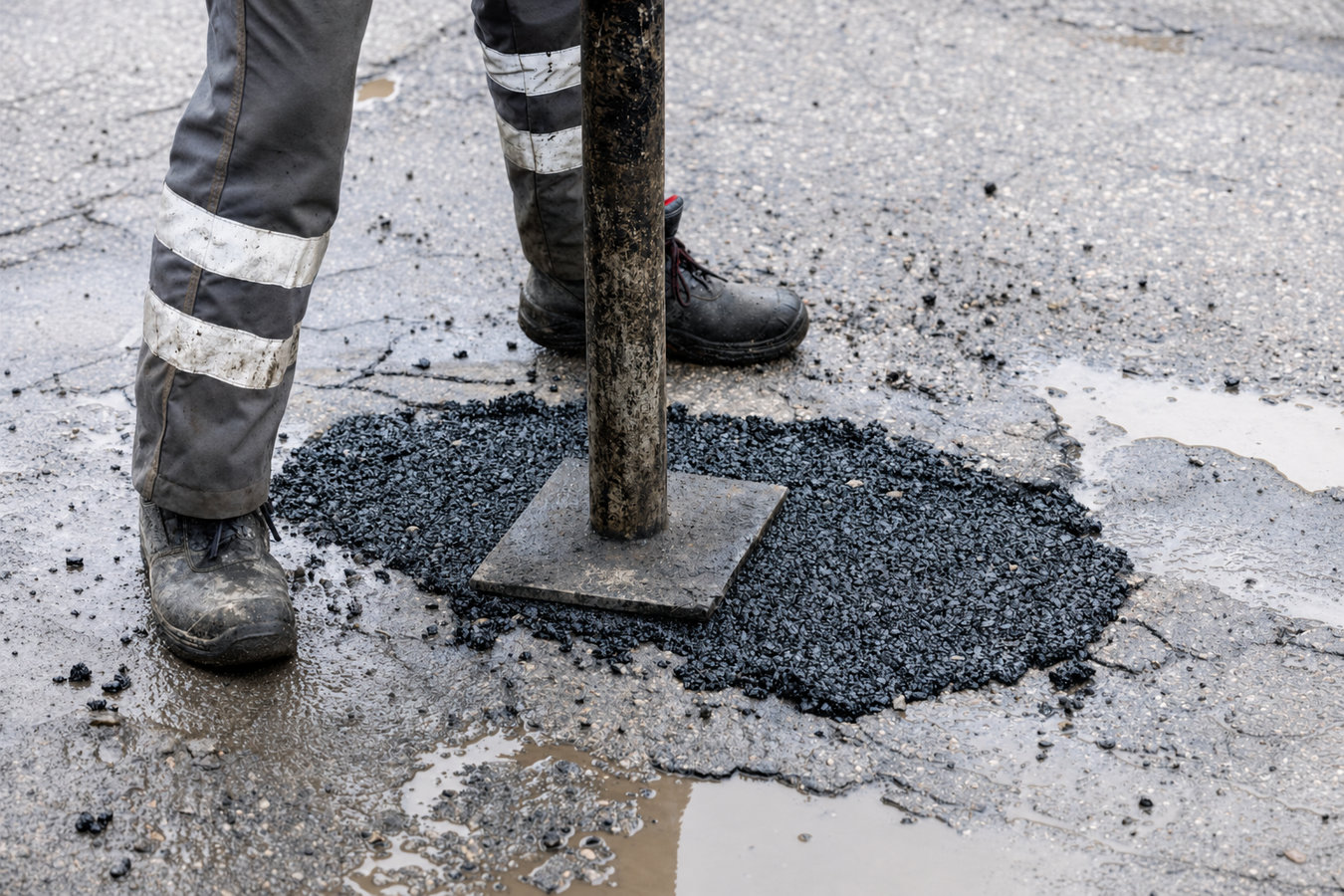
We handle the full range of asphalt repair work, from minor crack filling all the way up to full-depth section replacement. For crack filling, we clean out the crack and apply a hot or cold sealant that keeps water out and slows further damage. For patches, we cut clean edges around the damaged section, remove the failed material, check and repair the base if needed, then place and compact fresh hot-mix asphalt. Clean cuts and proper compaction are what separate a repair that lasts from one that lifts and crumbles within a year.
After repairs are complete, we often recommend pairing the work with asphalt crack sealing on any remaining hairline cracks to stop them before they widen. For larger areas of damage or multiple problem zones across a parking area, our pothole repair team can scope the full extent of work in a single visit.
Best for isolated cracks that have not yet widened - seals out water and slows further deterioration before the damage escalates.
For potholes, large broken sections, or areas where the base has failed - removes the damaged material, repairs the base, and places new asphalt.
Raises sunken sections where water pools, regrading the surface so runoff moves away from the garage and foundation.
Fixes crumbling driveway edges before water infiltration from the sides migrates inward and causes the damage to spread toward the center.
Tulare's clay-heavy soils are the root cause of most driveway damage in this area. Unlike the freeze-thaw cracking common in colder climates, damage here comes from the ground moving underneath the pavement - clay swelling with winter rain and irrigation water, then shrinking in the dry summer heat. A contractor who does not understand this dynamic will patch the surface and call it done, and the same forces will crack the repair within a season or two. Fixing drainage and addressing subgrade instability alongside the surface repair is often what makes the difference between a lasting result and a repeat call. The National Asphalt Pavement Association publishes guidance on repair techniques and mix specifications that hold up in high-temperature environments like ours.
We work across Tulare and into the surrounding communities. Homeowners in Porterville and Lindsay face the same soil and heat conditions that affect Tulare driveways, and we bring the same base-first approach to every repair job across the region.
Describe what you are seeing - cracks, potholes, low spots, or crumbling edges. We will schedule a time to come out and look at the driveway in person. We respond within one business day and the estimate is free.
We walk the damaged areas and assess not just the surface but what is happening underneath. In Tulare, we check specifically for signs of subgrade movement or moisture from clay soils - because base problems here are often not visible from above.
For patches, the crew saws clean edges around the damaged zone, removes the failed material, inspects and repairs the base if needed, then places and compacts fresh hot-mix asphalt. Compaction is what makes the patch durable - under-compacted material crumbles quickly in the heat.
Stay off the repaired area for at least 24 hours - longer for larger patches in summer heat. Once the repair has cured, we can advise on scheduling a sealcoat over the repaired area to protect the fresh work and extend the life of the whole surface.
We will walk your driveway, check the base, and give you a straight answer on what your pavement actually needs - no pressure, no upselling.
(559) 837-6833Before we patch anything, we check what is happening underneath. In Tulare's clay soils, a surface repair that skips the base check is not going to last - and we would rather tell you that upfront than have you call us back in a year for the same spot.
The mix used for repairs in Tulare needs to hold up through triple-digit summers. We specify materials formulated for high-temperature stability - not whatever is available cheapest - because a repair that goes soft in the first heat wave is not a repair.
If a driveway has reached the point where repeated patching costs more than a full replacement over time, we will tell you that directly. We do not push bigger jobs to make more money - we give you the information you need to decide what is right for your property.
A California contractor's license is a public record you can verify in minutes through the state's online database. We encourage every customer to check before signing anything. A contractor who hesitates to give you their license number is a contractor to avoid.
A repair that addresses both the surface and the underlying cause lasts. One that only patches the top will fail again when the same forces - heat, clay movement, water - do exactly what they did the first time. That is the standard we hold our repair work to on every job. Check any California contractor license at cslb.ca.gov.
Seal hairline and moderate cracks before they widen into potholes or structural failures.
Learn MoreFull-depth pothole fixes with base inspection for driveways and commercial pavement.
Learn MoreSmall cracks become large potholes faster in valley heat and rain - call now for a free estimate and stop the damage while it is still manageable.